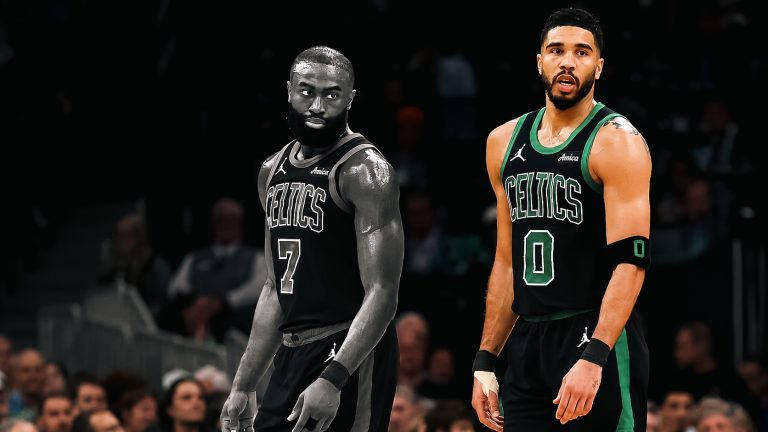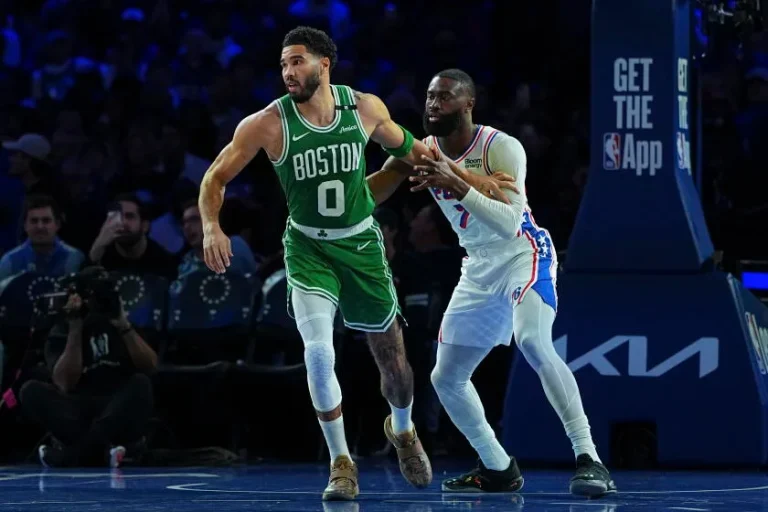


Trading a franchise cornerstone is never easy, especially when that player helped bring a championship to your city. If you’re a Celtics fan, the Jaylen Brown trade probably feels like finding out your favorite restaurant changed its recipe. Sure, the new version might be good, but why mess with something that worked?
Brown wasn’t just another player in Boston. He was a homegrown star, a five-time All-Star, a two-time All-NBA selection, and the 2024 NBA Finals MVP. He spent a decade helping build the Celtics into a champion and played a major role in delivering Banner 18. So naturally, trading him was going to upset people. But here’s the thing: sentimental attachment doesn’t win championships. Sometimes a front office has to make a call that makes fans want to throw the remote through the television.
Shipping Brown to a division rival for Paul George and four draft picks was always going to be controversial. But there are legitimate reasons behind the Jaylen Brown trade. This wasn’t about Brown suddenly becoming a bad basketball player. It was about Boston weighing its finances, its roster, and its championship window, then deciding something needed to change. The Celtics can’t afford to waste any of Jayson Tatum’s prime.
The Math Behind the Jaylen Brown Trade
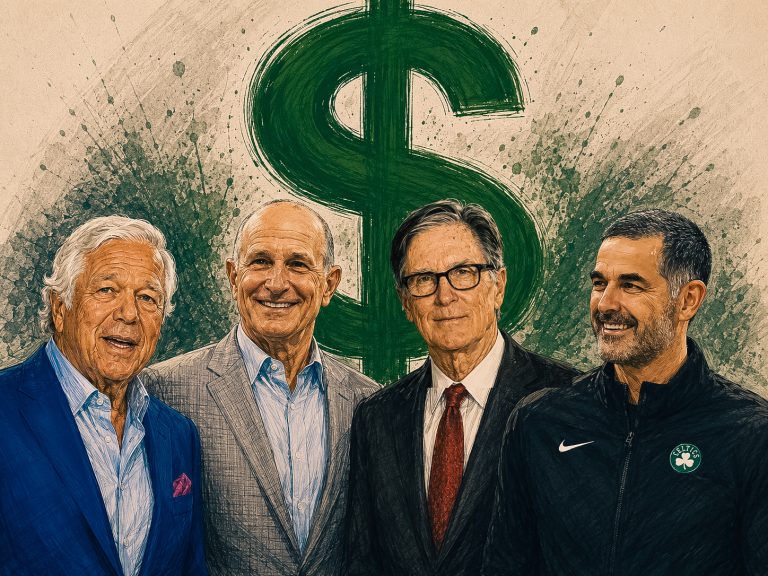
The NBA salary cap is no joke anymore. Between luxury taxes, the second apron, and massive contracts, building a champion is harder than assembling IKEA furniture without instructions. Brown and Tatum are both on supermax deals worth 35% of the cap apiece. That’s roughly 70% of Boston’s salary cap tied up in two players. That’s an awful lot of money, no matter how talented they are. Basketball still requires five players on the court, and the Celtics can’t send Tatum and Brown out there with three folding chairs and expect to win the Eastern Conference.
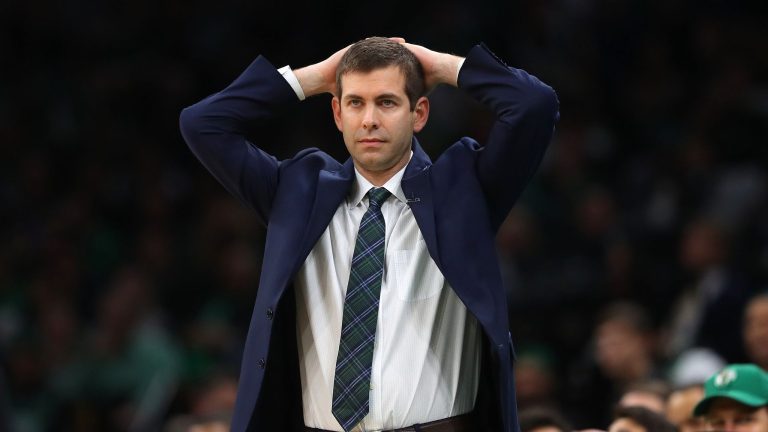
Brad Stevens had to consider whether keeping both stars at their current salaries would leave enough flexibility to build a complete roster. Championship teams need quality role players, reliable depth, and guys who can step up when the stars aren’t having their best nights. Two superstars and a bench that looks like the winners of a local pickup tournament isn’t a championship formula. Stevens believed Boston needed a different financial approach, and while fans may disagree with the decision, the concern itself was legitimate.
Selling High With the Jaylen Brown Trade
Another reason the trade makes sense: Boston sold high on an established star. Brown was coming off the best season of his career, averaging 28.7 points per game while Tatum missed most of the year recovering from his Achilles injury. Brown proved he could carry an offense, create his own shot, and serve as the primary option on a winning team. His value was about as high as it was ever going to get.
Boston could have kept him and kept building around the same core. Instead, it turned one star into another veteran star plus four future picks. That may not sound exciting when you’re watching Brown drop 30 in Philadelphia, but draft picks have real value, especially in the hands of a front office that has used them as well as this one. They give Boston a path to develop young talent, add cheap contributors, or package those selections in another trade. Stevens didn’t just acquire four pieces of paper with NBA logos on them. He acquired options, and options are extremely valuable when you’re trying to retool a contender without starting over.
The Paul George Gamble
Of course, the biggest question surrounding the deal is Paul George. Trading a younger star for an older player with a significant injury history is always going to raise eyebrows. George is an excellent basketball player when healthy, but that last part is doing a lot of heavy lifting. At this point, Celtics fans hear the words “when healthy” and immediately start looking for the nearest bottle of ibuprofen.
Still, George brings a skill set Boston can use. He’s an excellent perimeter shooter, can create his own offense, defends multiple positions, and doesn’t need the ball in his hands every possession to make an impact. The Celtics don’t need him to replace everything Brown brought to the table. They need efficient scoring, secondary playmaking, perimeter defense, and veteran leadership. If he stays on the court, the fit could work extremely well. If he spends more time in street clothes than Celtics green, this trade becomes a very expensive lesson in optimism.
My belief is the organization plans to use George’s contract as a trade chip next summer. Once he opts into the final year of his deal, he becomes a big expiring contract, and Boston can package him with some of those picks to upgrade the roster.
The Part Nobody Wants to Say About Jaylen
Pundits panned the Jaylen Brown trade because it didn’t save Boston any money this season. That misses the bigger picture. The savings were never about this season’s payroll. They were about Brown’s next contract. Brown is eligible for an extension that would pay him $142 million over two more seasons. If he felt disrespected when Tatum was introduced last during the playoffs, how would he react to not being offered the largest AAV in team history? This is a player who has shown he’ll take his ball and go home. The return wasn’t ideal, but the Celtics cashed in before the tension boiled over. Given how many stars moved this summer, I’m confident Stevens got the best return available.
Part of the reason the market was cool: Brown still dribbles like he has two left hands. He coughed up 259 turnovers last season, 3.6 per game. There’s a hero complex at times, and he’s never been shy about speaking his mind off the court, which may not sit well with every front office. He was an MVP candidate last year, but it didn’t come without warts. He’s an excellent player, just not as good as he thinks he is, and that kind of blind spot can’t be fun to share a locker room with. To be clear, none of that erases what he did in green. But this trade wasn’t only about the cap sheet. Stevens was also deciding whose team this is, and how much he was willing to pay to keep the peace.
Building Around Tatum
Jayson Tatum’s future played a major role in Boston’s decision. For years, the Celtics built their identity around the Tatum and Brown partnership. Together they reached five Eastern Conference Finals and two NBA Finals, and put a bow on it with the 2024 championship. There was a time when suggesting Boston split them up would have gotten you laughed out of the room.
But circumstances change. Tatum’s Achilles injury forced the organization to rethink its roster and its long-term plans. Boston had to figure out what the team should look like when Tatum is fully back and how best to surround him with talent. Keeping Brown would have preserved a proven championship duo, but trading him gave the front office a chance to reshape the roster. That doesn’t mean Brown was holding Tatum back. They won together, and nobody should forget that. It simply means the best way forward might look different than it did in the past. Sometimes you have to rearrange the furniture, even when everybody liked where the couch was.
Judge the Jaylen Brown Trade by the Return, Not the Reaction
Championship organizations can’t become prisoners of their own success. Boston won Banner 18 in 2024, but that doesn’t mean the front office should keep the same roster forever and hope everybody magically gets younger. Players age, injuries happen, contracts get more expensive, and other teams improve. Fans naturally attach themselves to the guys who deliver championships, and Brown earned that loyalty. But a front office can’t make decisions based on who sells the most jerseys or gets the loudest ovation during introductions. If that were the case, half the NBA would be paying players by the number of highlights they post on Instagram.
It’s also important to remember that Brown succeeding in Philadelphia wouldn’t automatically make the Jaylen Brown trade a mistake. Nobody needed to trade him to find out he could score, defend, and perform under pressure. If he becomes an MVP candidate with the 76ers, good for him. The real question is what Boston does with the return. If George stays healthy, contributes to winning basketball, and helps Tatum get back to contention, the immediate payoff could justify the move. If Boston also turns those picks into meaningful contributors, or flips them for another established player, the long-term value gets even bigger.
The Clippers Wild Card
Keep an eye on that 2028 first. If it ends up tracking the Clippers, it looks like a lottery pick at the very least. That franchise is a sinking ship after the league stripped it of five first-round picks over the Kawhi Leonard fiasco.
On the other hand, if George spends the season collecting medical evaluations, the picks turn into nothing, and Brown leads Philadelphia to a title, Stevens might want to avoid his social media notifications for a while. That’s the reality of blockbuster trades. You don’t get to declare victory because the press conference went well. See: the Durant, Booker and Beal Suns.
In Brad I Trust
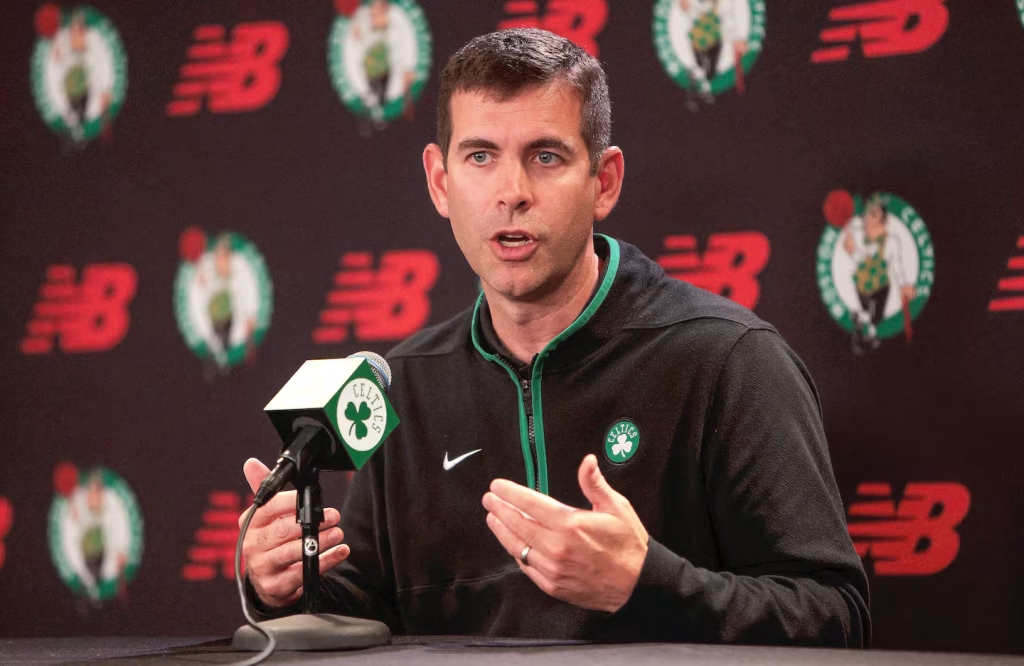
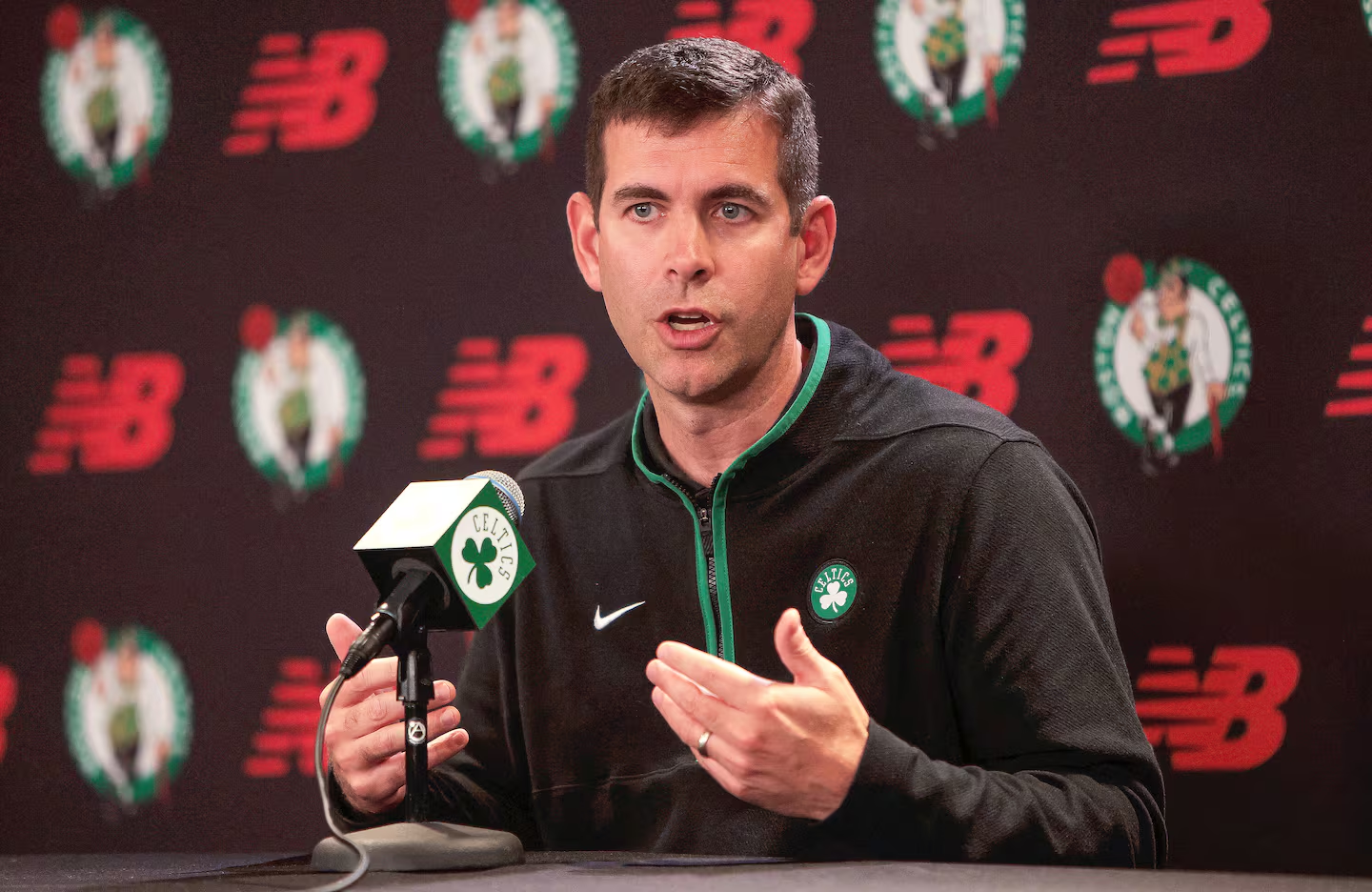
Stevens deserves some benefit of the doubt. He’s established himself as one of the most respected executives in the NBA and built the roster that won Boston’s 18th championship. That doesn’t make him incapable of mistakes. Even the best front offices occasionally make moves that age about as well as moldy bread. But his track record matters. He understood what Brown meant to this franchise, and he understood the financial wall the organization was heading toward. His job wasn’t to make the popular decision. It was to make the one he believed gives Boston the best chance to compete for more banners.
A quick look at the early returns is promising. George is averaging 20.6 PTS 5.4 REB 4.0 AST, while adding two steals a game. His best stat is playing in 11 of 13 games. Availability is the best ability. The advanced metrics confirm his season is tracking in the right direction, highlighted by a 20.6 net rating. He leads all Celtics’ starters and is 7th in the NBA in that category. Meanwhile JB is having trouble finding his footing with a 2.8 net rating. His flaws were put on display when the Celtics came to town last week. He was in constant foul trouble leading to only 26 min played. He ended the game with 13 pts, 5 reb and 4 turnovers. And Mr. George came out swinging like a young Tyson, finishing with 36 pts on 14 of 22 shooting including 6 threes and 5 boards. I have been most impressed with his overall defense. He is everywhere. Playing the passing lanes, switching and helping when a double team is needed. The Celtics went on to take the first meeting 123-101. The C’s were in control for the duration. PG was the catalyst for the victory.
Not everyone at ConquerSports loves the Jaylen Brown trade. For the other side of the argument, read They Traded Jaylen Brown. The Return Is the Problem. Fans have every right to question the move, but Stevens should be judged on the results, not the initial reaction.
Good front offices check their feelings at the door. Great front offices maximize their assets. In Brad I trust.
About The Author