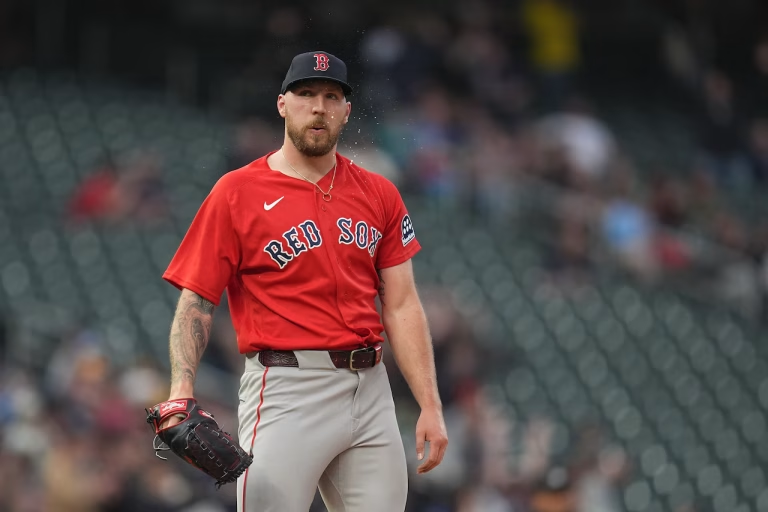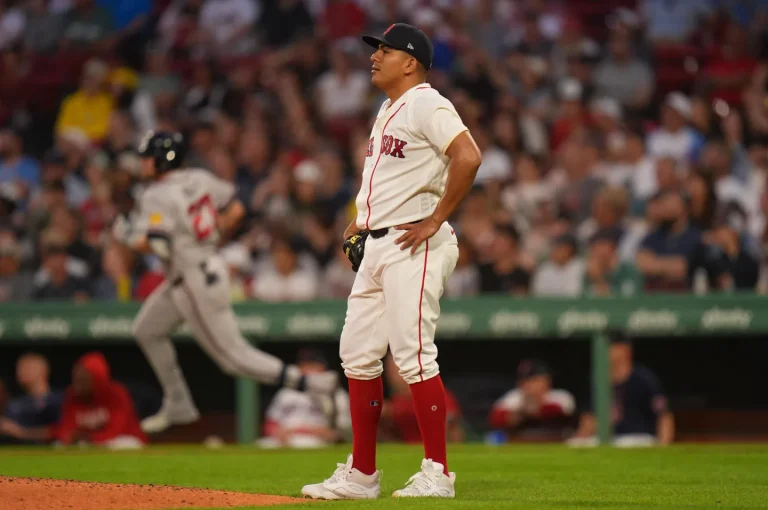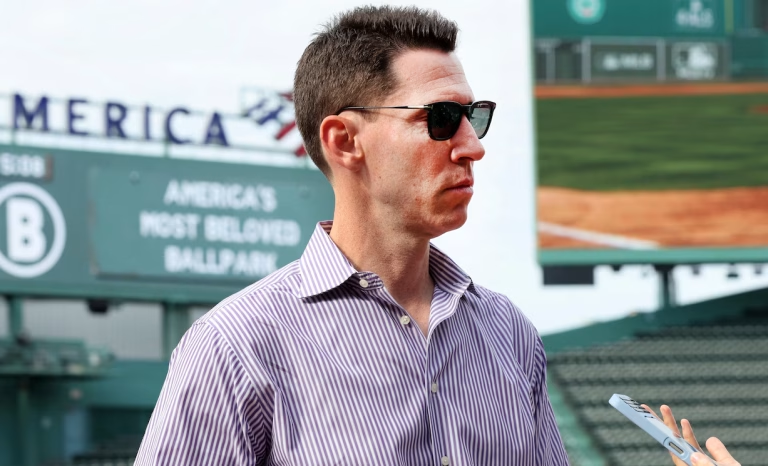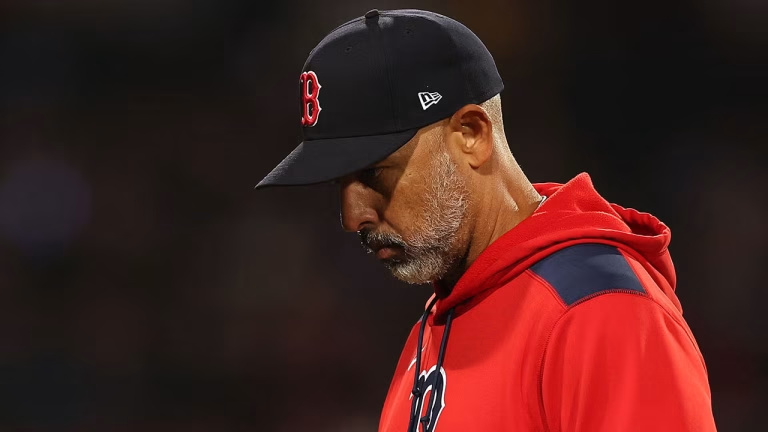
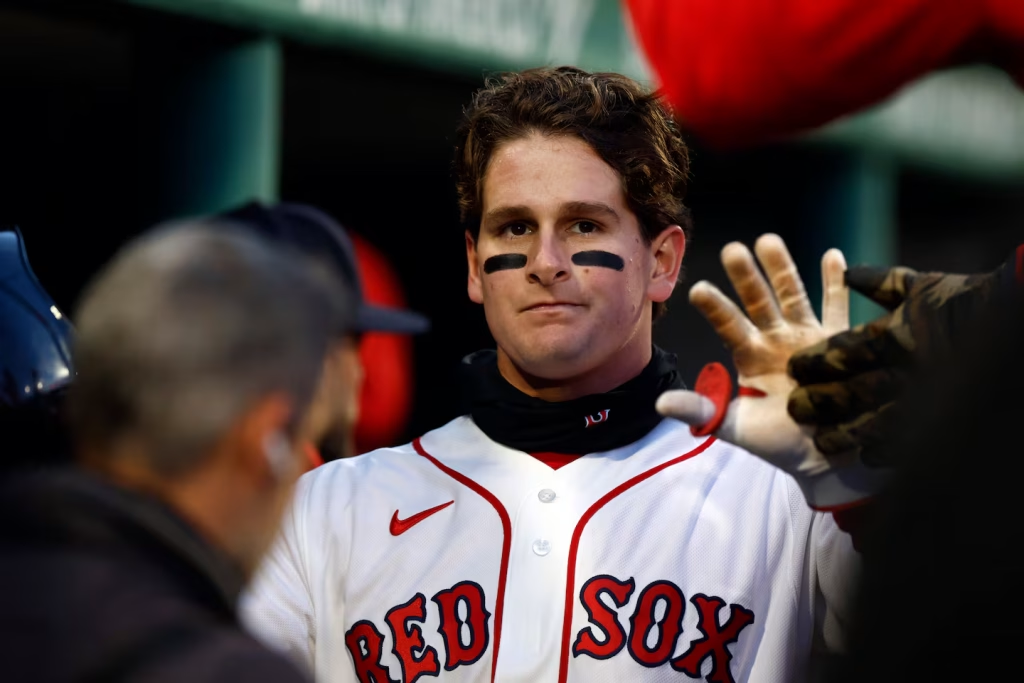


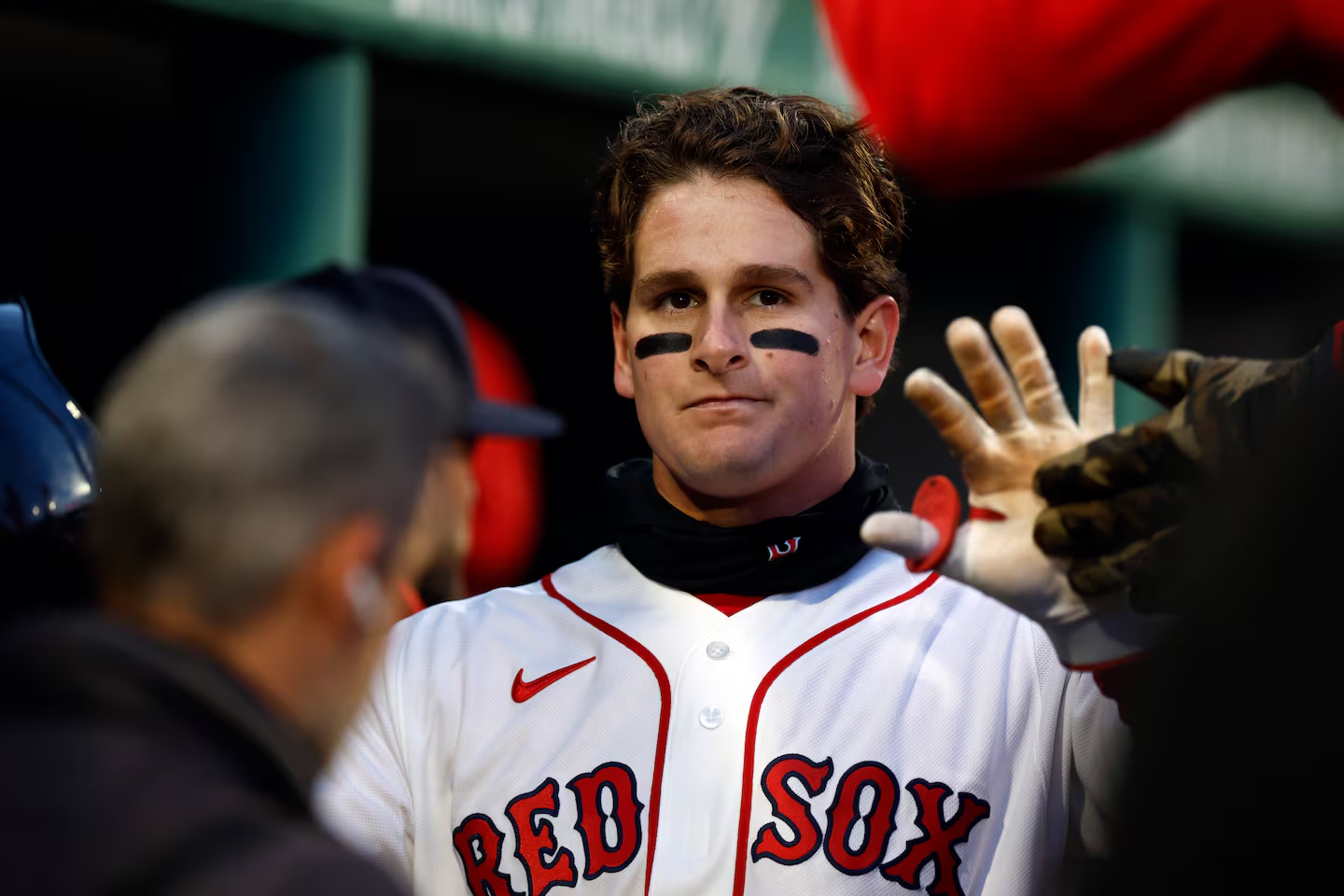
Everything should be good in Red Sox Nation this morning. Boston just won its 14th straight game, the second-longest winning streak in franchise history, and the vibes around this club have arguably never been better. But buried underneath the excitement and the highlight reels is a question nobody in the organization seems eager to answer out loud: do the Red Sox have a Roman Anthony problem? Because when you actually line up the timeline of the last two and a half months, the story is a lot messier than a 14-game win streak makes it look.
The World Baseball Classic Introduced Everyone Else to Roman Anthony
Before any of this, Roman Anthony was must-watch television. Red Sox fans had known what they had for a while, but this spring the rest of the country got to find out for themselves during the World Baseball Classic. Suiting up for Team USA, Anthony was arguably the most electric player in the entire tournament, hitting safely in six of his seven games and leading the American roster with seven RBIs. He finished the WBC slashing .280/.400/.520 with two home runs, five walks against just six strikeouts, and for a stretch he was genuinely part of the tournament MVP conversation alongside names like Shohei Ohtani and Aaron Judge. It wasn’t just a hot week. It looked like a coronation.
We felt strongly enough about what we saw to put real numbers behind it. Back in March, in our Boston Red Sox: 2026 Season Preview, we projected Anthony for a .285-.300 average, 25 to 30 home runs, 90-plus RBIs and 5-plus WAR, and we said flat out that if things clicked early, we were talking All-Star buzz and maybe even MVP chatter by midseason. That wasn’t some outlier hot take, either. That was the read after watching him carry Team USA’s lineup on a stage with the entire baseball world watching.
Then the regular season started, and the script flipped fast. Instead of carrying that WBC momentum into Opening Day, Anthony scuffled almost immediately, and by mid-April the concern wasn’t about talent, it was about approach. Reports at the time described him pressing at the plate, chasing pitches out of the zone and trying to force results rather than trusting the elite plate discipline that made him so dangerous in the WBC. He then missed a couple of games in late April with back tightness, a minor issue on its own, but one more small setback in a month that was already trending the wrong way. And then came May 4th, when the wheels really came off.
An Injury That Just Won’t Heal
On May 4th in a game against the Detroit Tigers, Roman Anthony experienced pain in his right hand/wrist after an awkward check swing. He immediately left the game. The next day, the Red Sox labeled the wrist and finger injury day-to-day. More than eleven weeks later, that “day-to-day” tag looks laughable. Boston has since transferred him to the 60-day injured list, and as of this week reports confirm he still isn’t even able to swing a bat without discomfort. For a player many considered the centerpiece of this roster’s future, that timeline is jarring, and it’s fair to ask whether the injury alone explains why he’s still so far from the field. Ligament and tendon injuries in the hand are notoriously tricky for hitters, sure, but eleven-plus weeks without any significant progress is a red flag by any measure, and it’s the kind of stall that usually invites more questions than the club has been willing to answer publicly.
IKF Said the Quiet Part Out Loud
Questions about the young star got a lot louder back in early June, when infielder Isiah Kiner-Falefa made some eyebrow-raising comments about the vibe inside the home clubhouse at Fenway Park. The timing wasn’t random. At that point, the Red Sox owned an MLB-worst 9-20 record at Fenway compared to a much healthier 16-14 mark on the road, and the offense was averaging just 3.17 runs per game at home compared to 4.70 on the road, a split their own interim manager admitted he couldn’t fully explain. Kiner-Falefa contrasted the tight-knit feel of the team on the road with what he described as a crowded, unfamiliar atmosphere at home, complaining about seeing “a lot of people we don’t know” during home games. He never named Roman Anthony directly, and he walked the comments back the very next day, insisting he was really just talking about how much more crowded and distracting Boston is compared to life on the road. Still, it didn’t take long for fans and local sports radio to connect the dots anyway, with plenty of speculation swirling that the comments were really aimed at younger players like Anthony and Marcelo Mayer getting caught up in the big-league lifestyle. Maybe that’s all it ever was. But it’s worth remembering that Kiner-Falefa is a well-traveled veteran who has played in several big-league clubhouses, so when talk like that starts circulating around one specific young player recovering from a serious injury, it’s not something that should just get brushed aside as noise. For a lot of fans, this was the moment the Roman Anthony problem stopped being a whisper and became a real conversation.
The Fort Myers Move Nobody Saw Coming
Then came the move that really got people talking. On July 6, the Red Sox sent Anthony away from the team entirely, shipping him down to Fort Myers to continue his rehab away from the big-league clubhouse. The club framed it as a way to give him a singular focus on his recovery, but the optics were impossible to ignore: a young star, already dealing with a lingering injury and pointed comments from a teammate, was essentially removed from the environment altogether. And it’s not like Boston is some medical backwater. This is a city home to some of the best doctors, surgeons and sports medicine facilities in the entire world, the exact kind of resources professional athletes routinely fly in from other cities to access. Instead of leaning on any of that, or on the trainers and medical staff who already know his case inside and out, the Red Sox shipped their most important young player over a thousand miles away to rehab on his own. It’s also worth pointing out just how unusual that is. Players rehabbing from injury almost always stay with the big-league club, working alongside the team’s own trainers, coaches and medical staff in the same clubhouse as their teammates. Shipping a player out of the building entirely, rather than having him rehab in-house, is a significant departure from how teams typically handle this situation, which is exactly why it raised so many eyebrows in the first place. What makes matters worse for Anthony is the timing of it all. The Red Sox had already kicked off this current winning streak on July 3, and they simply have not lost a single game since sending him away three days later. Boston has now ripped off 14 straight wins with its presumptive franchise player nowhere near the clubhouse, and every additional win in that streak only makes his absence look like a bigger and bigger Roman Anthony problem, not a smaller one.
So What’s Actually Behind the Roman Anthony Problem?
This is really the crux of it. What, exactly, was going on that made the front office feel a drastic move like shipping a 22-year-old cornerstone player out of the building was necessary? An injury alone doesn’t usually require removing a guy from his teammates entirely, so something else has to be part of this equation. Social media and fan forums have been buzzing for weeks with rumors and sightings of Anthony out enjoying Boston’s nightlife, in spots around the North End and the Seaport, during the same stretch he’s been unable to swing a bat. It’s the kind of gossip that’s easy to latch onto, and if true, it certainly wouldn’t help the perception that he isn’t fully locked in on his rehab. But in our opinion, it can’t just be that. Plenty of players go out and enjoy a city during a long season without getting exiled to Florida, so if the Red Sox truly felt the need to remove him entirely, it likely points to something bigger, whether that’s a deeper accountability issue, a breakdown in trust between Anthony and the coaching staff, or simply a front office that has run out of patience with how he’s handled this rehab. Until Chad Tracy or Craig Breslow give a fuller explanation, fans are left to connect the dots themselves, and right now those dots don’t paint a flattering picture.
Chapman’s Comments Add More Fuel to the Roman Anthony Problem
That brings us to last night. After closing out win number 14, Aroldis Chapman sat down with reporters and, speaking through a team interpreter since he does most of his interviews in Spanish, made a point of praising something beyond the box score.
“Very happy with the way I see the guys playing, and how they are behaving on and off the field.”
— Aroldis Chapman, translated from Spanish
It’s a subtle line, and Chapman never mentioned Anthony by name. On its own, it reads like a veteran closer giving standard praise for a team playing loose during a 14-game win streak. But context is everything, and this is a clubhouse that already has one teammate on record about the vibe at home, a franchise player shipped out of the building entirely, and months of unanswered questions swirling around him. Whether Chapman meant anything specific by it or not, comments like that tend to get filtered through whatever storyline is already sitting there, and right now that storyline is Roman Anthony.
So, Is There a Roman Anthony Problem?
None of this proves Roman Anthony is a bad teammate, and injuries are injuries regardless of what’s happening in the clubhouse. But between the injury timeline that keeps getting pushed back, a teammate publicly questioning the culture around him, a decision to remove him from the team entirely, unconfirmed but persistent chatter about his off-field habits, and now a closer praising the group’s behavior in his absence, the Red Sox have created a storyline that isn’t going away on its own. Winning 14 in a row buys patience, and it’s clearly buying the front office cover to handle this quietly rather than address it head-on. But patience isn’t the same thing as an explanation, and eventually somebody in that organization is going to have to answer for why their most talented young player has been pushed further and further from the team all season.
Personally, I think the Red Sox have handled Roman Anthony poorly all season. They loaded an enormous amount of pressure onto a 22-year-old’s shoulders heading into the year without ever bringing in a proven veteran star who could help mentor a young superstar who is still very much developing, both as a hitter and as a person navigating his first real taste of the big-league spotlight.
They also never should have put a firm timeline on his injury in the first place. Labeling it day-to-day only invited people to start questioning his desire to get back on the field once that timeline blew past by weeks and then months, and it set the stage for the Fort Myers move to look even worse, especially since the team still hasn’t offered an explanation for that decision that actually holds up.
Do I think Roman Anthony has some maturing to do? Probably, yes. But the Red Sox haven’t done him any favors either. This is a player they have a massive amount invested in, and one they need going forward if this era of Red Sox baseball is going to mean anything. At some point, the organization needs to stop letting a win streak paper over the situation and start actually doing whatever it takes to support him and get him back on the field. Until they do, the Roman Anthony problem isn’t going away on its own.
The sooner Roman Anthony is back on the field, the better.
About The Author