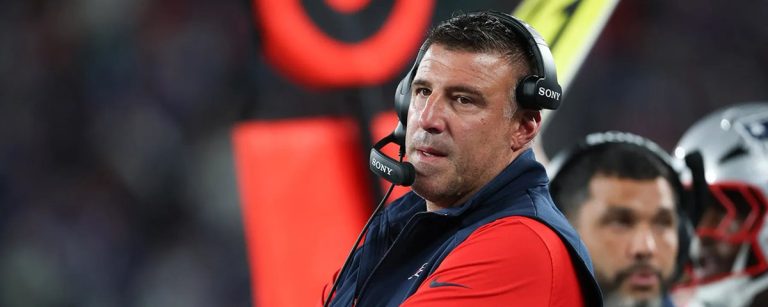


From the outside looking in, the verdict has already been handed down.
Across national media, rival fanbases, and the daily churn of NFL discourse, the New England Patriots are once again the story — but not for what they accomplished on the field. A splashy report from the New York Post, followed by Dianna Russini’s resignation from The Athletic, has Mike Vrabel suddenly cast as the central figure in a controversy tailor-made for headlines. Almost overnight, the focus shifted away from wins, culture, and a historic Super Bowl run — and straight to questions about character and whether the man leading this franchise should now be viewed differently. The outrage came fast, amplified by a wave of takes that feel less rooted in substance and more in the kind of engagement-driven narrative that dominates the modern sports media cycle.
And just like that, the same head coach who took a 4-13 team to the Super Bowl in a single season is no longer being discussed for what he built — but for who people suddenly believe he is.
Let’s be clear: there isn’t a single candidate in football better suited to lead the Patriots right now — or moving forward — than Mike Vrabel. Not despite the controversy. Not independent of it. Simply because the case for Vrabel is overwhelming — historically rare, deeply aligned with what this franchise needs, and far too strong to be undone by headlines.
He Set the Standard and Hit It Immediately
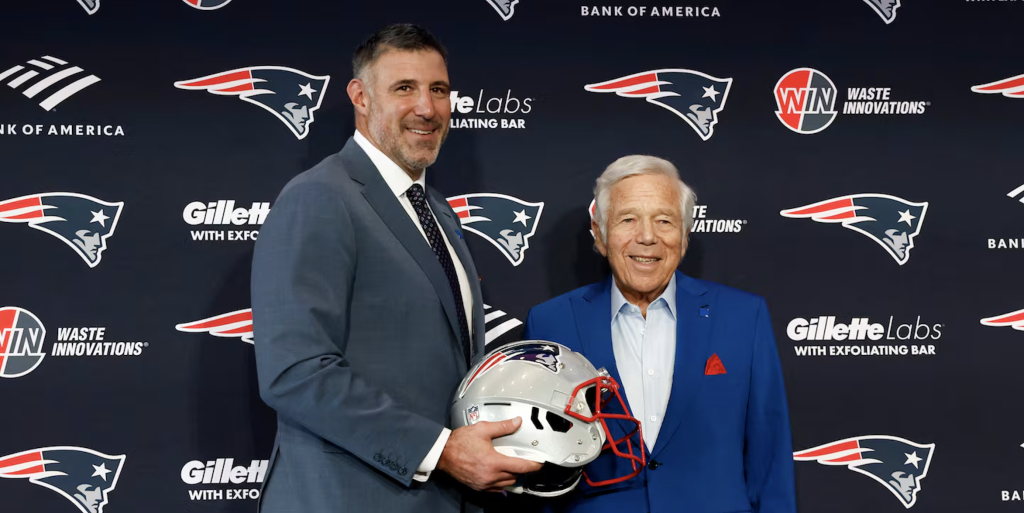
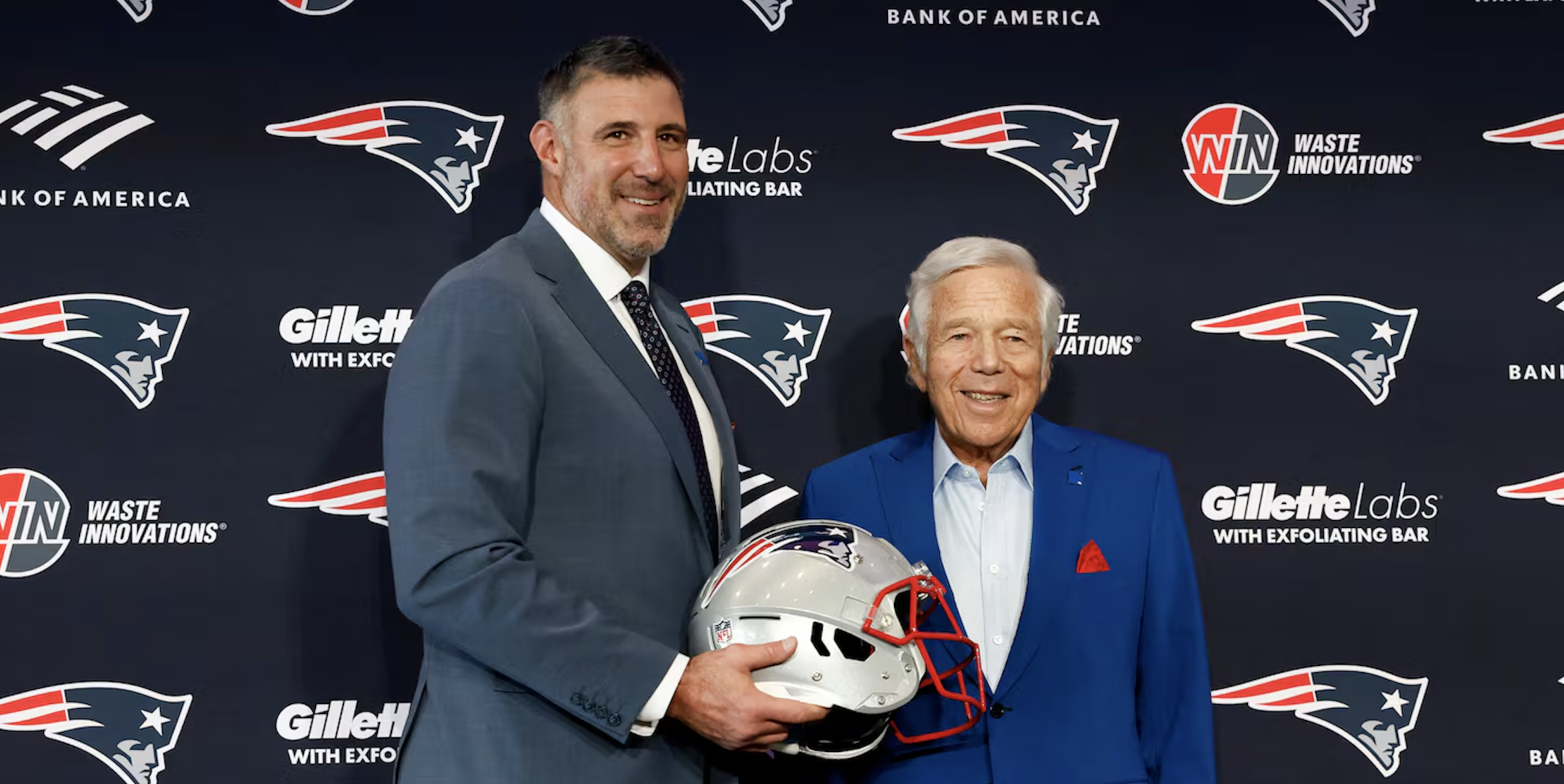
When Vrabel was introduced as the Patriots’ 16th head coach on January 13, 2025, he didn’t deal in vague promises. He laid out three clear objectives. “Our goals will be to win the AFC East, to host home playoff games, and to compete for championships,” he said at the podium inside Gillette Stadium. He was careful not to attach a timeline, noting he wouldn’t put a deadline on those benchmarks any more than a team puts a timeline on a player’s injury.
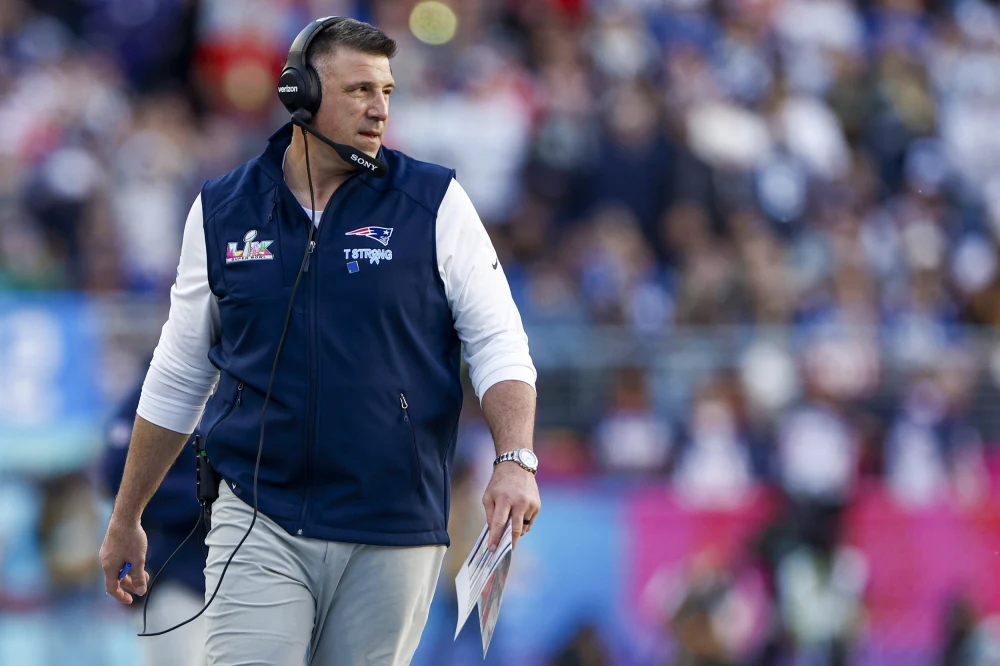
The assumption — a reasonable one — was that those goals represented a multi-year roadmap for a franchise that had just gone 4-13, had suffered back-to-back losing seasons for the first time since the early 1990s, and was still figuring out whether its second-year quarterback could be the franchise cornerstone it desperately needed.
He accomplished all three goals in Year 1.
Vrabel took that 4-13 team and led them to a 14-3 record — a 10-win improvement tied for the largest by any team with a new head coach in NFL history. The Patriots won 10 consecutive games from Weeks 4 through 13, never lost a road game during the regular season, and claimed the AFC’s No. 2 seed. They won the AFC East for the first time since 2019. They hosted home playoff games, knocking out the Los Angeles Chargers 16-3 in the Wild Card round — the franchise’s first playoff victory since 2018. They beat the Houston Texans. Then they went on the road and beat the Denver Broncos 10-7 in the AFC Championship Game to reach Super Bowl LX.
The season ended in a painful 29-13 loss to the Seattle Seahawks. But getting there — with that roster, in that timeline — was one of the great single-season coaching performances in modern NFL history. He became only the eighth head coach ever to reach the Super Bowl in his first season with a team. He was named AP Coach of the Year, his second such honor after winning it in 2021 with the Tennessee Titans. He was the only coach in history to engineer a 10-game turnaround in his debut with a franchise.
Vrabel didn’t just meet expectations. He shattered them.
The Culture He Built is the Asset that Lasts
The wins are easy to see. What’s harder to quantify — but just as important — is the kind of team Vrabel built around those wins. He didn’t inherit a roster ready to compete. He inherited a program that needed to relearn what competing even felt like. And from Day 1, he set about doing exactly that.
Drake Maye — who blossomed into one of the game’s most electric young quarterbacks, throwing for 4,394 yards and 31 touchdowns against just 8 interceptions — described what Vrabel installed in the building immediately. “Have your head on a swivel and get to work,” Maye told reporters early in the offseason. That was the message. Not a speech. Not a vision board. Just expectations, clearly stated and consistently enforced. Maye added that Vrabel “seems like he’s been here a while. He’s so comfortable being a coach. He’s done it before, he’s done it at a high level. You can see he’s trying to install a new identity.“
Vrabel himself was deliberate about the kind of people he brought in to build around that identity. “We were intentional about who we brought in,” he said ahead of Super Bowl LX. “There was a program in place that they could look at, that they could believe in, that they wanted to be a part of, and that they wanted to protect.” The result was a locker room that embraced accountability and played with a collective resolve rarely seen from a team in its first year under a new staff.
Even in the gut-punch aftermath of a Super Bowl loss, cornerback Carlton Davis captured the feeling in the building perfectly: “It’s our first year together. Nobody thought we would be here. We put the league on notice… We’ve got a bright future, man.”
That’s not a team falling apart. That’s a team that knows exactly what it’s building toward.
The Controversy and Why It Doesn’t Change the Reality
Yes, it happened. The photos surfaced. The coverage exploded. Dianna Russini resigned, and Vrabel has faced intense scrutiny.
But before he ever faced reporters, he faced his team. On the first day of voluntary offseason workouts, Vrabel stood in front of his players and led with it — directly, candidly, and without deflection. Sports Illustrated’s Albert Breer, who had been vocal in the days prior that Vrabel absolutely had to address the locker room — pointing to the signs that hang in every meeting room at the facility reading “make good decisions on and off the field” and warning it would become a credibility issue if he didn’t — reported that Vrabel did exactly that and did it right.
Per Breer, Vrabel opened by quickly apologizing for bringing unwanted attention to the team, promised to make it right, and committed to putting the focus back where it belonged. Crucially, Breer reported the address was taken very positively by the players. “The fact that he immediately took accountability with the players, at the first point he had them all together, was always going to be the right thing to do,” Breer wrote. “And now, even if Vrabel can’t personally, his players can start to move past this.” When Vrabel later described the conversation to reporters, he was straightforward: “I have to lead. I have to make sure I address things and communicate.” He said those conversations had been “positive and productive.“
That sequencing matters. He didn’t hide behind a polished press conference statement and hope the room would fall in line. He walked into the building, faced his players first, owned it, answered their questions, and moved forward — together. That is what leaders do.
When he did finally speak publicly, he was measured. He called it “a personal and private matter.” He acknowledged having “some difficult conversations with people that I care about.” He promised that everyone will “get the best version of me going forward.” He took accountability — not in a dramatic, performative way, but in the way a leader who knows he created a distraction does: by owning it, addressing it with his players directly, and moving forward.
The personal elements of this story belong to Vrabel, his wife, and his family. Full stop. What belongs to the public conversation about the New England Patriots is this: Vrabel’s locker room has not splintered. His players have not questioned their commitment to him. The organization has stood behind its head coach. And critically, Vrabel himself made clear that the distraction ends with accountability — starting with himself.
The Russini story is a personal failing that Vrabel has to live with and work through. It is not a football failing. It is not a leadership failing in the locker room. And it is emphatically not a reason to blow up one of the most promising coaching situations in the entire NFL.
The noise is real. The controversy is real. And yet, when you stack it against everything Vrabel has built, everything he has proven, and everything this franchise still needs him to finish — it doesn’t even come close.
Ahead of Schedule by a Mile
After the Super Bowl, Mike Vrabel reminded his team of the bigger picture: they were just 307 days into what he expects to be a long, successful run.
307 days.
That’s all it took to go from irrelevance to the brink of a championship.
The Patriots have a 22-year-old franchise quarterback in Drake Maye, who just put up back-to-back Pro Bowl seasons and is still ascending. They have cap space to continue building. They have a coaching staff Vrabel trusts and a locker room that trusts Vrabel. The infrastructure for sustained success — the kind New England fans remember from the dynasty years — is being assembled right now, brick by brick.
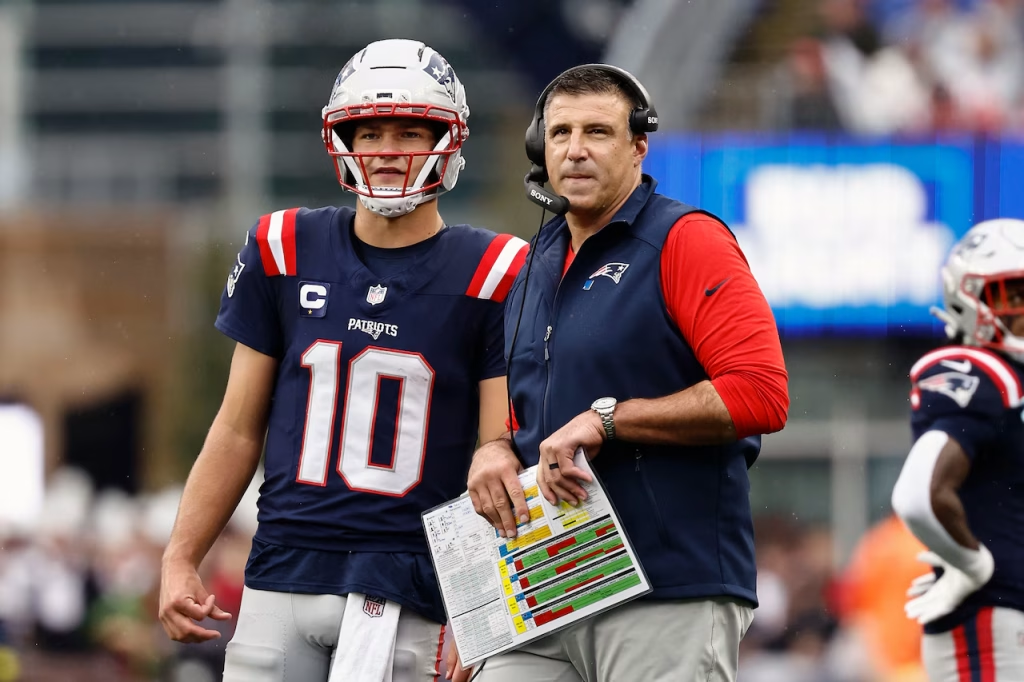
The Dianna Russini controversy will fade. NFL news cycles always do. What won’t fade is the foundation Vrabel has laid: the wins, the culture, the accountability, the belief inside that building that this is only the beginning.
New England has seen coaches make promises before. What makes Vrabel different is that he walked in, told this fanbase exactly what he was going to do, and then did it — faster than anyone thought possible.
Through one of the more scrutinizing offseasons a Patriots coach has faced in recent memory, that track record doesn’t disappear.
No one is better positioned to lead this franchise. No one is better equipped to finish what he started. And no amount of tabloid noise changes a single word of that.
Mike Vrabel is the right man for this job. He was on Day 1. He still is today and there is NO ONE that I would rather have.
About The Author