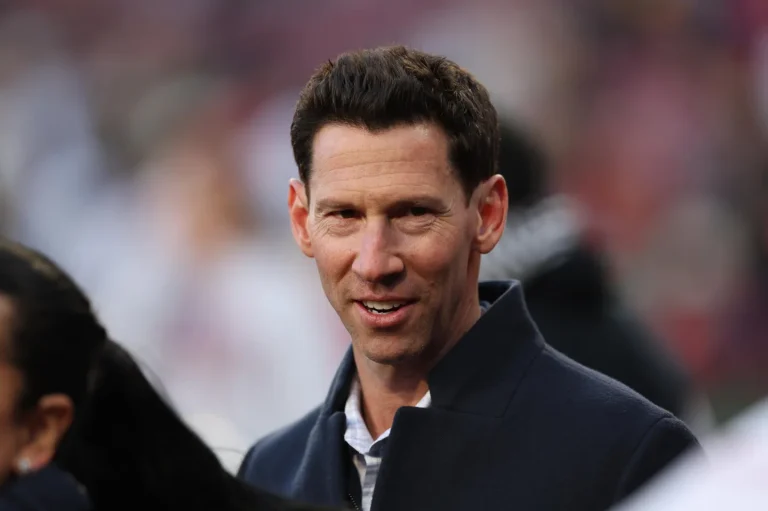


Give Craig Breslow this much: he was not scared to work the phones this Red Sox trade deadline. In a market where half of baseball treats the trade deadline like an optional group project, Breslow spent the days leading up to 6 p.m. actually reshaping his roster instead of just talking about reshaping it. Say what you want about the individual pieces coming back, and I will, at length, in a minute, but the man had a plan for how he thought this team gets better, and he executed on it four separate times. That’s not nothing. Front offices get paralyzed all the time by the fear of being wrong in public. Breslow clearly decided he’d rather be wrong doing something than safe doing nothing, and I respect that instinct even when I have real questions about the return.
So let’s run through it. MLB.com’s trade deadline coverage had Boston squarely in the mix for upgrades before the deadline hit, and Breslow delivered.
The Mead Move Set Up This Red Sox Trade Deadline
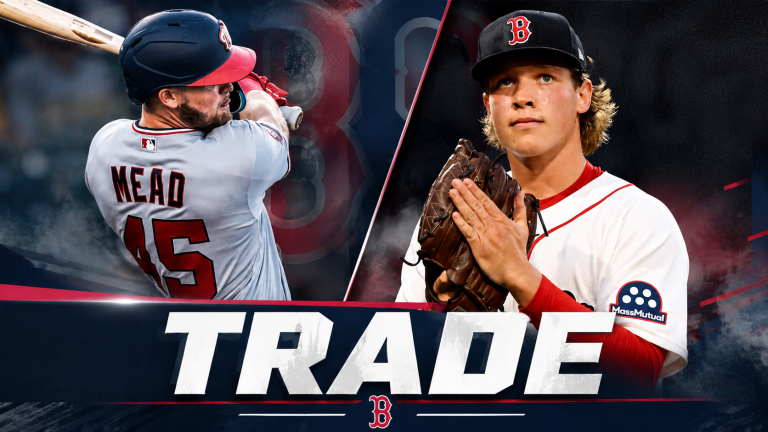
Technically this Red Sox trade deadline started a week early, when Breslow flipped rookie lefty Connelly Early to Washington for infielder Curtis Mead. I already broke that trade down in full here, and I’m not going to re-litigate the whole thing. The short version is I liked the bet on Mead’s underlying numbers even after the wrist injury complicated the picture. If you want the deep dive, go read it. What matters for this piece is that Mead was the appetizer, not the entree. The real deadline was still in front of Breslow when that trade closed, and it didn’t take him long to keep moving.
Adley Rutschman Comes to Boston
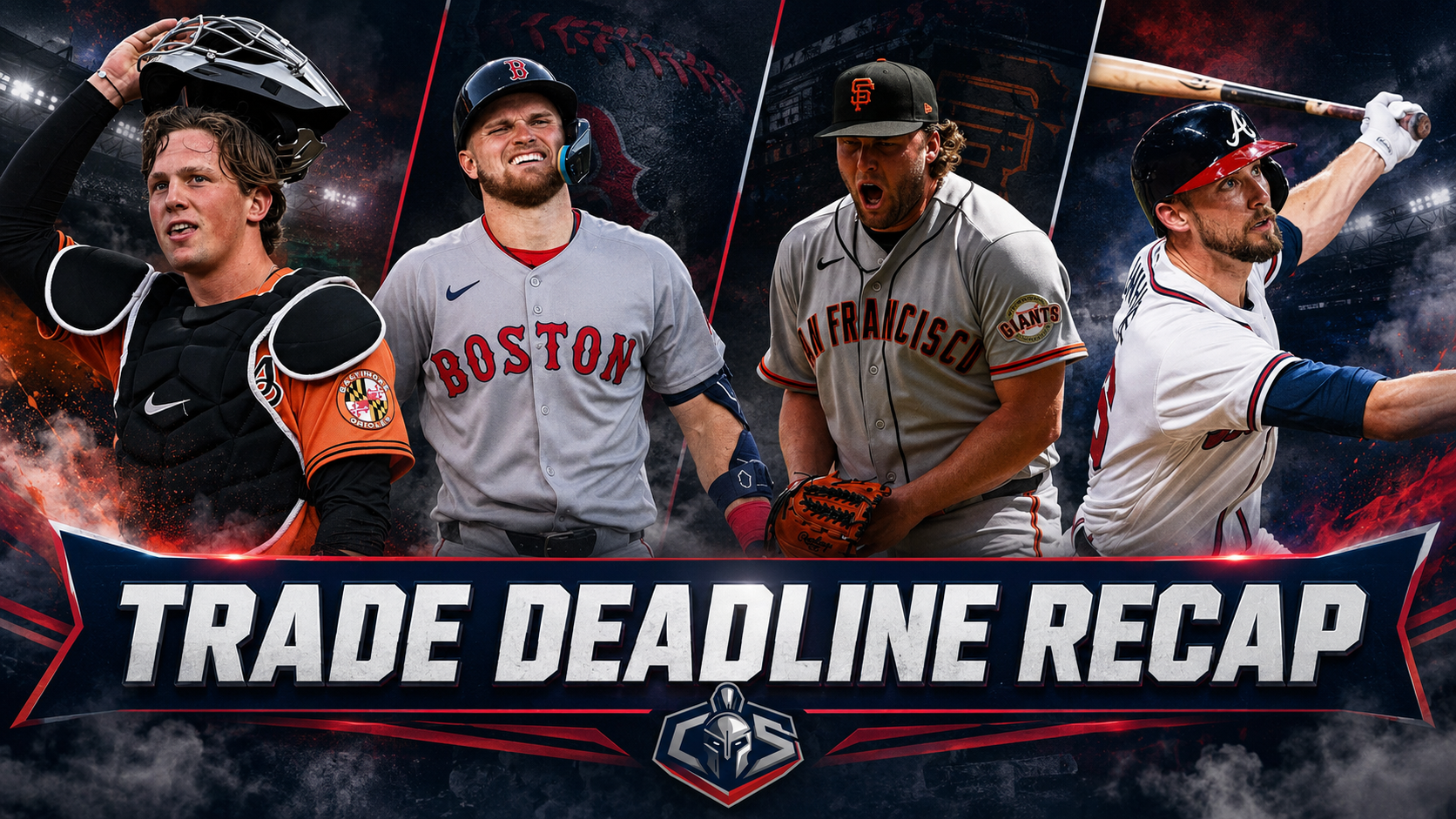
This is the move that will get the headlines, and for good reason: Adley Rutschman was a former No. 1 overall pick and a legitimate franchise catcher not that long ago, and now he’s wearing a Red Sox uniform. On paper, that’s the kind of name that makes an entire fan base sit up. Boston has been trying to solve catcher for what feels like forever, and adding a switch-hitting former All-Star behind the plate is a real, tangible upgrade over what the position has given the lineup this year.
Here’s my hesitation, and it’s not small: Rutschman hasn’t actually looked like peak Rutschman in a while. He’s been on and off of the injury list multiple times over the past couple of seasons, and the offensive numbers have slid right alongside the availability. You’re not getting the guy who nearly won Rookie of the Year and looked like a top-five catcher in baseball. You’re betting on a rebound from a player who has given you real reasons to wonder if the rebound is coming. I like the talent. I like the fit. I just don’t think this is the slam-dunk, buy-low-on-a-star move it’s being sold as, and Boston paid a real price to find out.
Look at the numbers and the hesitation makes sense. Rutschman posted a 132 wRC+ as a rookie, but that mark has slipped in each season since, and last year he settled in closer to league-average offense with a walk rate that no longer offsets a middling slugging percentage. His framing runs, once a real defensive carrying tool, have also trended down as the wrist and hand issues piled up. None of that means the bet is bad. It means Boston is paying starter-caliber value for a player whose peripherals currently profile more like a solid regular than a franchise cornerstone.
And the cost wasn’t small. To get Rutschman (along with backup catcher Jake Rogers and some cash), Boston sent Baltimore a real haul: right-hander Anthony Eyanson, the system’s No. 2 prospect and a top-50 name league-wide; right-hander Kyson Witherspoon, the org’s No. 4 prospect; outfielder Enddy Azocar, the No. 5 prospect; and, from the current roster, catcher Carlos Narváez. That’s three of Boston’s top five prospects walking out the door in one deal. Giving up that much of the pipeline for a player currently hurt and far from a sure thing, is the part of this trade that should give you pause.
Eli White Quietly Fills a Real Need
Eli White is the least exciting name in this piece, and that’s fine, because not every deadline move needs to be a headline. White is a versatile, defense-first player who can cover multiple spots on the infield and outfield, and that kind of roster flexibility matters in September when injuries pile up and matchups get tight. Nobody is going to build a bobblehead night around Eli White. He’s a bench piece who makes a roster deeper and more adaptable, and there’s real value in that even if it doesn’t move the needle on its own.
The defensive metrics back up the profile. White has graded out as a plus defender at multiple spots by Outs Above Average, and his sprint speed sits comfortably in the top third of the league, which is exactly the kind of thing that shows up in low-leverage innings rather than highlight reels. He’s not going to hit enough to be a difference-maker, but a sub-replacement bat paired with plus glove-and-legs value at three or four positions is a legitimately useful bench war chest, even if his bWAR will always look modest next to the names atop this list.
The good news is the price matched the profile. Boston sent out right-hander Tyler Uberstine as the lone piece heading to Atlanta. This is exactly the kind of role-filling trade you’re supposed to be able to make without touching the actual talent base, and it’s the one move this deadline where I have zero complaints about what it cost.
Trading Marcelo Mayer for Erik Miller
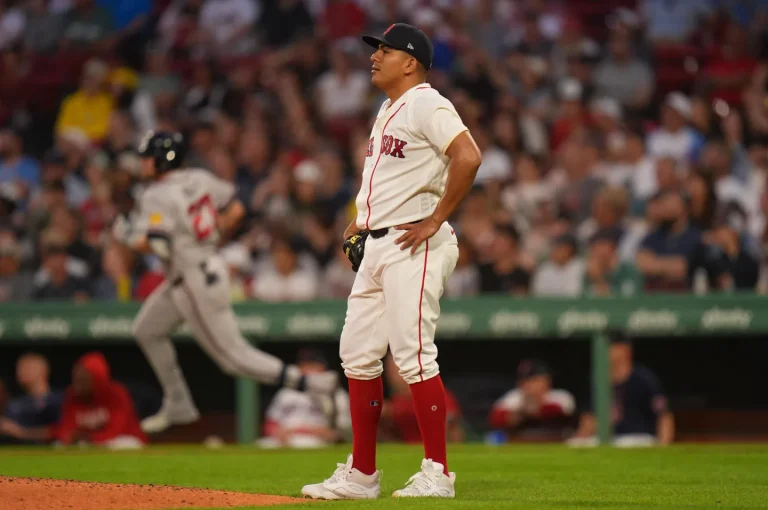
And now the one that actually stings a little. Marcelo Mayer was the No. 4 overall pick not that long ago, a shortstop prospect Boston fans have been dreaming on for years, and he got flipped for Erik Miller, a middle reliever. Miller’s strikeout numbers are legitimately impressive, the kind of swing-and-miss stuff that plays well out of a bullpen. But he walks a lot of hitters (6.1 walks per 9). That’s the return for a former top-five pick. I understand relief pitching helps win games in October and Boston clearly wanted another high-leverage arm, but the return for a former top pick and prospect just a season ago is definitely underwhelming.
Miller has elite swing-and-miss stuff and might remind you of another lefty that Breslow brought in with high strikeout and high walk rates that he was able to correct: Aroldis Chapman. Miller can be a real weapon if the command tightens, and a matchup-only middle reliever if it doesn’t.
Mayer, meanwhile, was a top-15 prospect in the sport by most rankings, with plus hit and power grades and everyday-shortstop tools still very much intact. That gap, a fringe-command reliever for a not too long ago top-of-the-line prospect, is the crux of the value question.
My Red Sox Trade Deadline Take
Here’s where I land on all of it. I like Mead, before the wrist injury complicated things. I like Rutschman as a talent and as an upgrade at the Catcher position. I even think Erik Miller can help this bullpen down the stretch. My issue isn’t with any single player Breslow brought back, it’s with the collective math. Boston moved a young, cost-controlled starter in Early and multiple highly regarded prospects, including a former top-five pick, for players who are solid but far from guaranteed. None of these are slam dunks. They’re bets, the same way Mead was a bet, and some of them come with real red flags already attached.
I already know the counter-argument, because I’ll hear it in the WAR Room within the hour: “they’re just prospects,” or Mayer might turn into another Kristian Campbell and never amount to anything anyway. That argument completely misses the point. Whether or not a prospect ever plays a single inning in Boston is irrelevant to what he’s worth in a trade. Prospects are currency and the entire job of a front office is to spend that currency efficiently. You don’t get to wave away a lopsided price just because the player you gave up might not have panned out. The market paid what it paid because of what he might become, and Boston cashed that value in for a middle reliever with a walk problem.
None of this changes the bottom line: Craig Breslow made the 2026 Boston Red Sox a better team at this Red Sox trade deadline. I’ll say that plainly, because it’s true, and because I don’t think credit and criticism have to cancel each other out. I like several of the players he brought back. I just don’t think he got full value for what he sent out the door, and in a business where the margins between contending and rebuilding are this thin, that gap matters.
About The Author