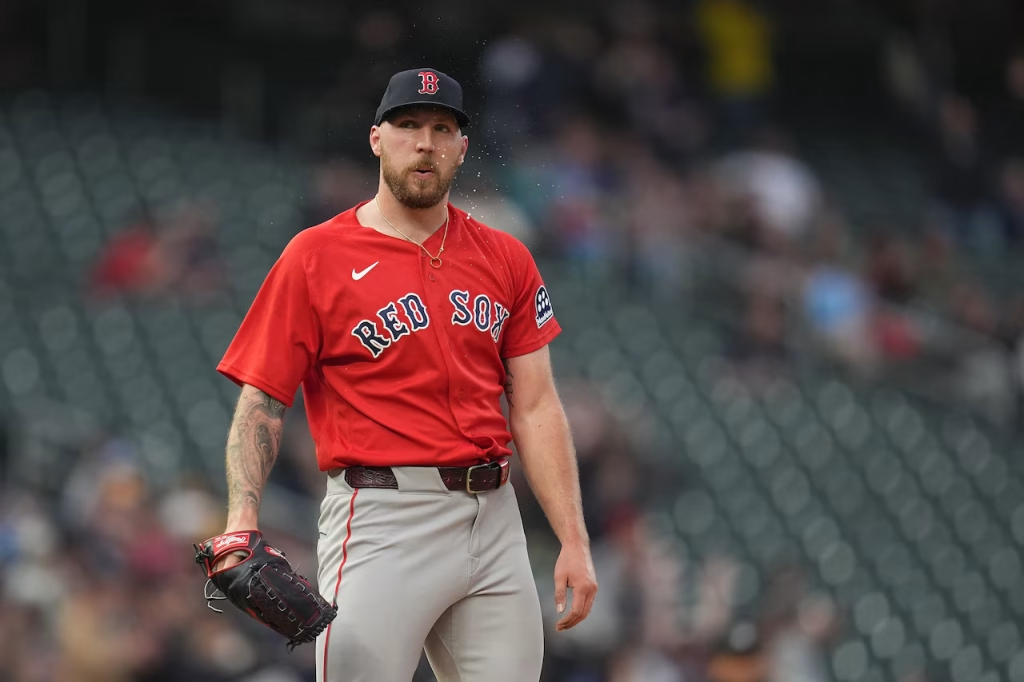


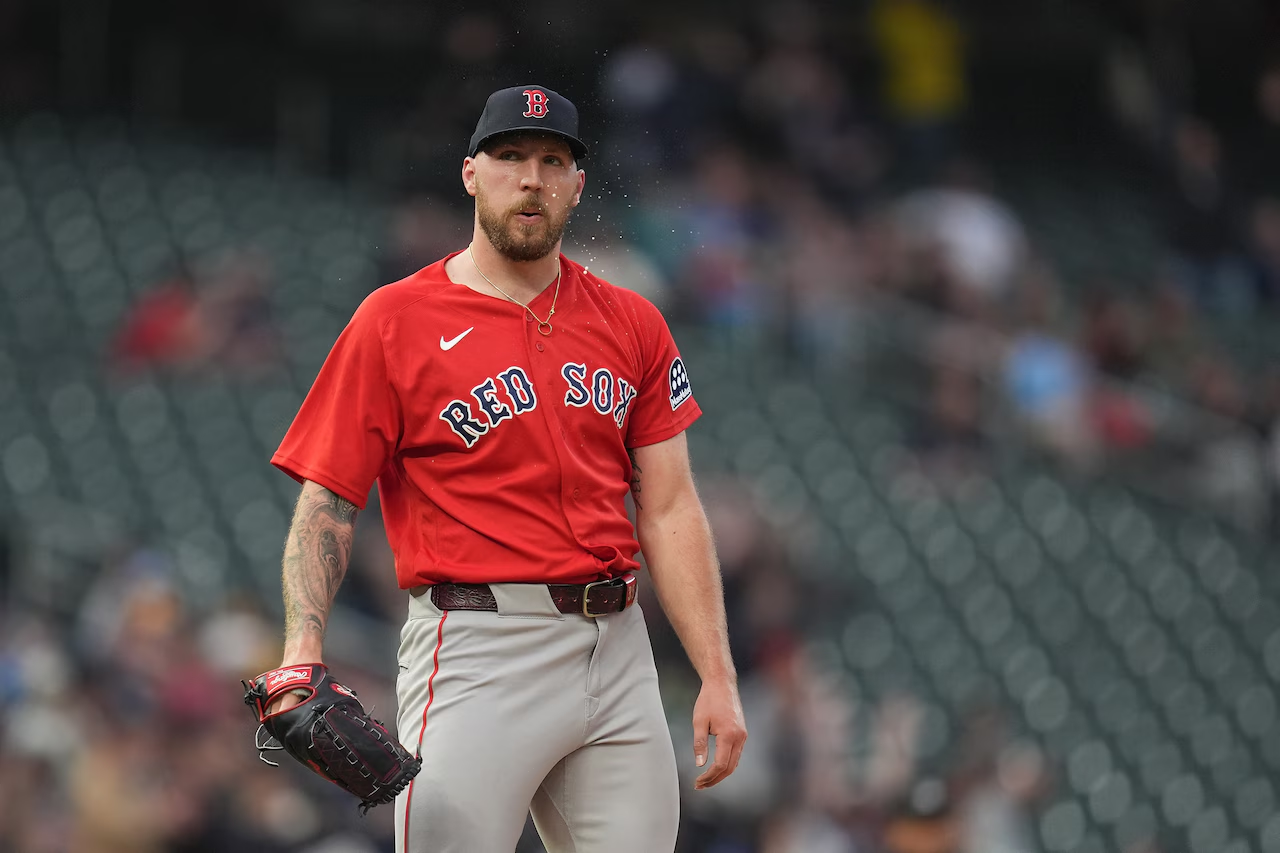
Last season, Garrett Crochet wasn’t just good — he was dominant.
He went 18–5 with a 2.59 ERA over 205 innings for the Boston Red Sox, striking out 255 batters with a 1.03 WHIP. His Statcast profile was elite across the board:
- 99th percentile in Pitching Run Value
- 99th percentile in Breaking Run Value
- 93rd percentile in strikeout rate
- 91st percentile in xERA
He was a true ace. Expectations heading into 2026 were sky-high.
Four starts into the season, reality looks very different.
Crochet sits at 2–2 with a 7.58 ERA over just 19 innings. The surface numbers are ugly — and the underlying data explains exactly why.
The Fastball Isn’t the Problem
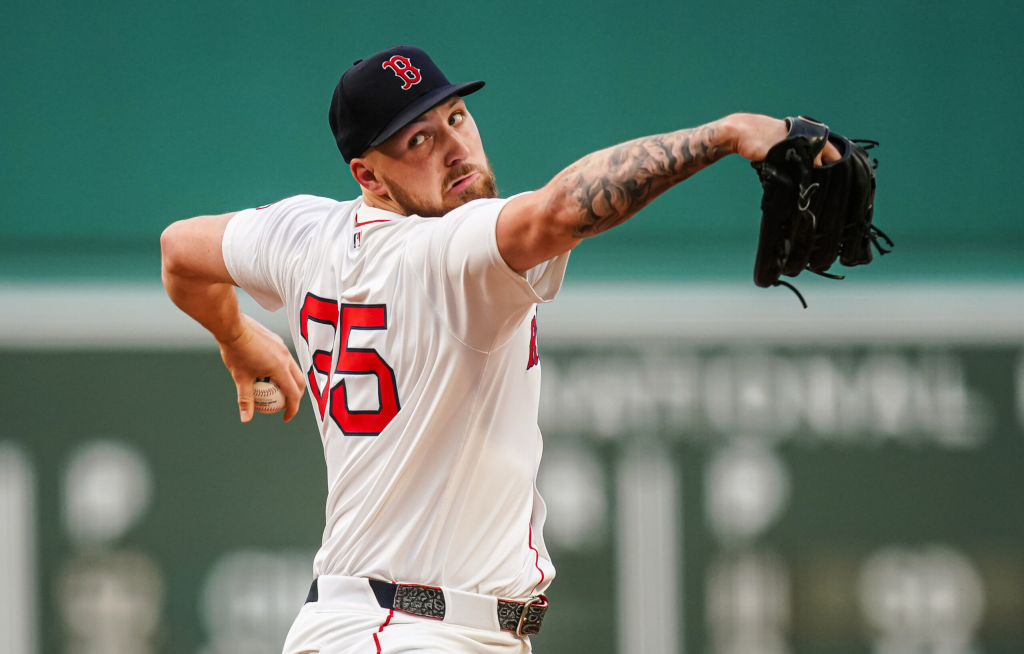
The first thing to establish when a pitcher struggles is whether the arm is healthy. In Crochet’s case, the fastball data offers some genuine reassurance. His 4-seam is still sitting at 95.9 mph and his sinker at 95.2 mph — both above left-handed pitcher averages by nearly 3 mph. His Fastball Run Value is at the 94th percentile, essentially identical to his 95th percentile mark from 2025.
The Breaking Ball Has Fallen Apart
In 2025, Garrett Crochet’s breaking arsenal was the best in baseball. His Breaking Run Value sat at the 99th percentile — a +15 run value that meant his cutter, sweeper, and related pitches were actively saving 15 runs above average over the course of the season. Opposing hitters simply could not solve his breaking stuff. It generated elite chase rates (90th percentile), elite whiffs, and a groundball rate of 49.3% that ranked in the 81st percentile.
In 2026, that same arsenal has a run value of -3, ranking at the 4th percentile. The breaking pitches that were a top-1% weapon last season are now actively costing him runs at a historic rate, performing worse than 96% of MLB pitchers. The collapse is about as dramatic as a single pitch category can experience.
The whiff rate tells the same story. Last season hitters swung and missed at 29.4% of his pitches — 78th percentile. This year, that number has dropped to 24.6%, landing at the 43rd percentile.
That’s nearly a 5-percentage-point swing-and-miss decline in the span of one offseason. When your breaking ball stops missing bats, everything else unravels.
Groundball Rate Has Dropped
Another quiet but critical shift in Crochet’s 2026 profile is his groundball rate. Last season he was inducing grounders on 49.3% of batted balls which was in the 81st percentile.
Through his first four 2026 starts, that rate has decreased to 42.2%, sitting at the 45th percentile — dead average.
That 7-point drop is not nothing. When your breaking ball stops generating the diving, late movement that pulls hitters into rolling over grounders, you end up with more fly balls, more line drives, and more home runs.
The Pitch Mix Shift: A Clue
Comparing Crochet’s 2025 and 2026 pitch usage reveals a potentially significant change in how he’s attacking hitters.
In 2025, he led with his 4-seam fastball at 36% usage, using the cutter as a secondary option at 28%. In 2026, those have essentially swapped: the cutter is now his most-used pitch at 32%, while the 4-seam has dropped to 26%. He’s leaning more heavily on his cutter — the very pitch type that is failing him.
Whether it’s a coaching adjustment, personal preference, or hitters picking up on patterns, the result is the same. He’s leaning into his biggest weakness while moving away from his strength right now.
Crochet Sweeper: Best to Liability
In 2025, Crochet’s sweeper was not just good — it was the single best sweeper in all of baseball, ranking 1st on the MLB Pitch Arsenal leaderboard with a Run Value of +15 and a RV/100 of +3.0. In 504 pitches thrown, hitters managed a .126 batting average, a .207 SLG, and a .152 wOBA against it. The whiff rate was 40.5%, and he put away 29.6% of plate appearances with it. It was a genuine swing-and-miss weapon at an elite level.
In 2026, that same pitch ranks 188th out of all sweepers thrown, with a Run Value of -3 and an RV/100 of -8.5. Hitters are now slugging .909 against it — an almost unimaginable number — posting a .364 batting average and a .605 wOBA. The whiff rate has fallen from 40.5% all the way down to 23.8%, and his put-away rate has cratered from 29.6% to 16.7%. Hard-hit rate allowed on the sweeper has gone from 25.9% in 2025 to 50.0% in 2026. Hitters aren’t just making contact — they’re destroying the pitch when they do.
Now, it is worth noting that his 2026 sweeper numbers come from just 41 pitches and 11 plate appearances, so the sample is small enough that the extreme outcome numbers (like the .909 SLG) should be taken with some caution. And this isn’t just a small-sample fluke — even the predictive metrics, which smooth out bad luck, show the sweeper is genuinely worse, not just unlucky. The pitch that was a top weapon for Crochet in 2025 has become something hitters recognize, time, and hit hard in 2026. It’s no surprise he’s throwing it less — when a pitch stops working, pitchers naturally lose trust in it. But pulling back from the sweeper isn’t a fix; it just removes a weapon from his arsenal without addressing why it stopped working in the first place.
Until there’s a mechanical adjustment that restores the tight, sweeping break that made it so lethal last year, scaling back usage is a band-aid, not a solution.
The xERA Gap: Bad Luck or Real Regression?
One important nuance in Crochet’s struggles: his actual ERA (7.58) dramatically overstates how bad he’s been. His xERA — which measures expected ERA based on quality of contact rather than outcomes — sits at 3.67. That’s a massive gap that suggests some bad sequencing, timing, and potentially poor defense have amplified his results beyond what his underlying pitching deserves.
So is this all just bad luck? Not entirely. A 3.67 xERA is still a full 0.78 runs worse than his 2025 mark of 2.89, and his xBA has jumped from .210 to .254. Hitters are genuinely making better contact against him. The underlying metrics confirm a real performance decline — just not one as severe as the 7.58 ERA suggests.
The honest picture is somewhere in between: Crochet is pitching worse than last year, primarily because his breaking ball has stopped working, but he’s also been a bit unlucky in how those struggles have translated to the box score.
What Needs to Change
The good news for Red Sox fans is that the diagnosis here is relatively targeted. This is not a pitcher who has lost his stuff across the board. The fastball is elite. The walk rate is under control. The strikeout rate, while down, is still solid. The problem has a clear address: the breaking ball, specifically the cutter, is not generating the movement, the whiffs, or the grounders it was producing last season.
In 2025, the breaking ball made hitters defensive and set up the fastball perfectly. In 2026, without that threat, hitters are getting into better counts and better positions to attack everything.
Crochet is 26 years old and was one of the ten best pitchers in baseball just a few months ago. The talent hasn’t evaporated. But four starts in, the data makes clear that something real has changed — and until the breaking ball returns to form, the results are going to keep looking ugly regardless of how well the rest of his arsenal performs.
About The Author